City Bank PLC and Gold’s Gym Bangladesh Partner to Drive Wellness Accessibility
City Bank PLC partners with Gold’s Gym Bangladesh to provide interest-free EMI and credit card benefits, driving growth in the wellness sector.






New research reveals that China\’s massive overseas spending—totaling $2.1 trillion since 2000—is not merely about generating returns, but is a core mechanism for achieving the strategic goals outlined in its Made in China 2025 initiative: to dominate 10 cutting-edge industries, including robotics, electric vehicles, and semiconductors.
AidData\’s research found that half of this massive spending has been directed at wealthy countries, often through state-backed banks providing loans routed through shell companies.
This unique financial power stems from China\’s banking system, which is the largest in the world—exceeding the size of the US, Europe, and Japan combined.
Victor Shih, director of the 21st Century China Centre at UC San Diego, highlighted Beijing\’s unique control over this vast system:
\”The government controls interest rates and directs where the credit goes. This is only possible with very strict capital control, which no other country could have on a sustainable basis.\”
This allows the government to fund large foreign acquisitions, ensuring key technologies can be brought back to China, aligning with their goal of accelerating \”high-level scientific and technological self-reliance\” until 2030.
Global alarm at this strategy has led to direct intervention in Europe, where Chinese state banks loaned $800 million in 2017 to help acquire the Dutch semiconductor firm Nexperia.
The strategic value of Nexperia\’s technology was so high that the Dutch authorities took control of the company\’s operations in September. The government\’s justification was the concern that the technology was at risk of being transferred to other parts of the Chinese parent company, Wingtech. The bold move effectively split Nexperia into two, separating its Dutch operations from its Chinese manufacturing arm.
Despite the fact that these purchases are legal, wealthy nations, including the UK and the US, have rapidly tightened investment screening mechanisms after realizing that individual deals were part of Beijing\’s broader, centrally-funded strategy.
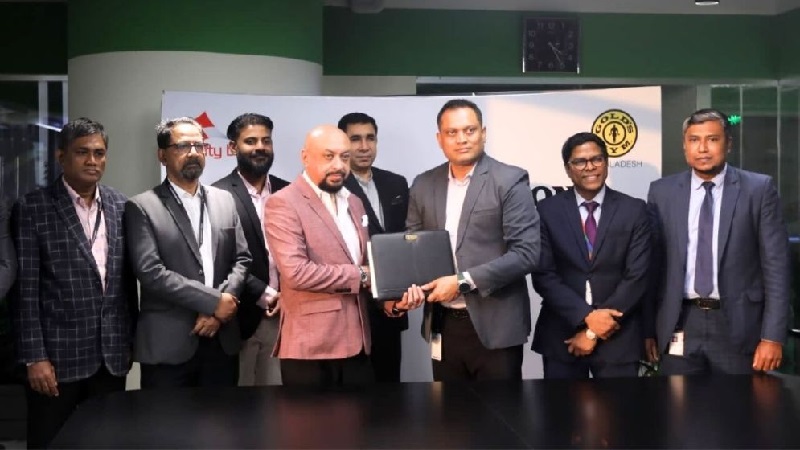
City Bank PLC partners with Gold’s Gym Bangladesh to provide interest-free EMI and credit card benefits, driving growth in the wellness sector.

Government gives green light for direct listing of profitable state-run companies and urges multinationals to begin the listing process immediately.
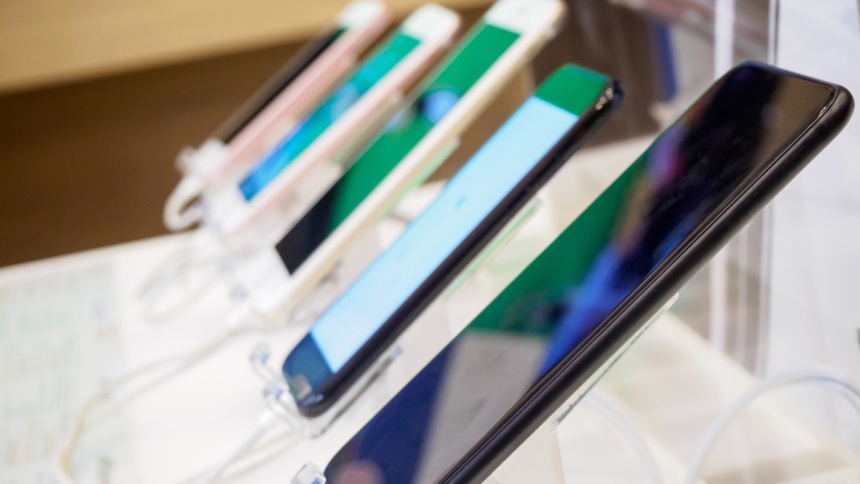
NEIR, set to block illegal phones via IMEI from Dec 16, faced a nationwide shop strike. Small traders protest the system, saying the high 58% tax on imports will destroy their livelihoods

Major sites like X and ChatGPT went down due to a Cloudflare internal crash. The security giant apologized for the \”unacceptable\” outage, and its share price dropped 3% as markets reacted

Bangladesh Bank DD Nayeem Rahman is missing after sending a message hinting at severe depression. The bank filed a GD as police investigate the disappearance of the official

France’s consumer watchdog, the DGCCRF, has reported fast fashion giant Shein to prosecutors and regulator Arcom for selling dolls with \”childlike appearance.\” The crisis emerges days before the brand\’s first permanent global store opens in Paris

With Washington paralyzed, the US government shutdown is no longer an inconvenience—it\’s a crisis. As 40 million face the loss of food stamps and military families stress over missed paychecks, the nation\’s most vulnerable become pawns in a five-week political game.