The End of Everything? New Data Suggests Universe May Collapse in a “Big Crunch”
Astronomers from South Korea and the DESI project have found evidence that dark energy is weakening, potentially reversing the expansion of the universe.





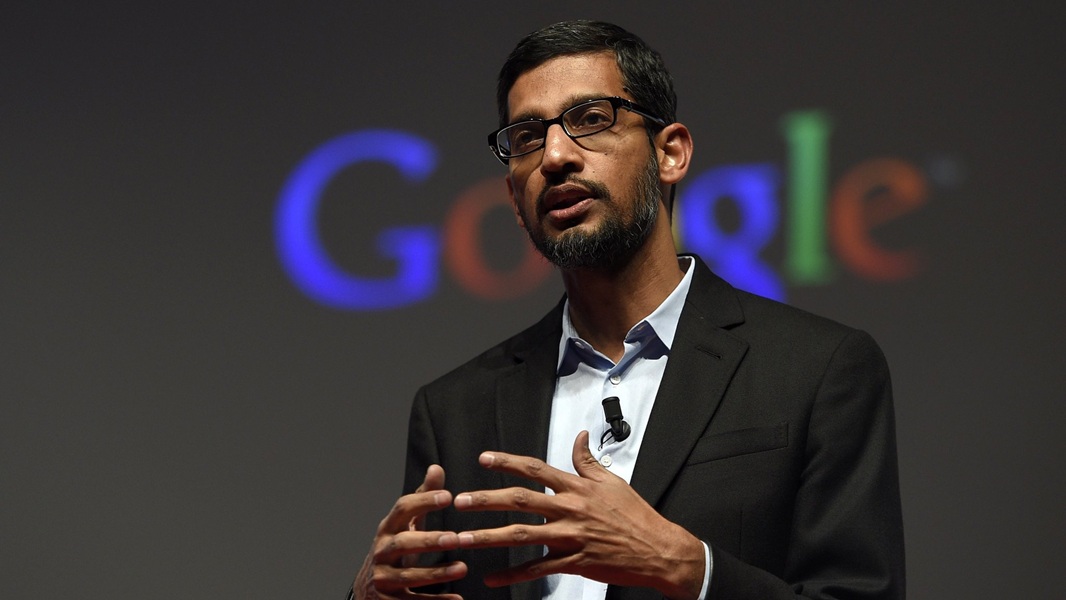
Alphabet CEO Sundar Pichai acknowledged that the massive energy needs of AI—which made up 1.5% of global electricity use last year—have impacted the company\’s net-zero by 2030 climate targets. He also stressed that AI\’s revolution will \”evolve and transition\” jobs globally.
In a wide-ranging interview, Sundar Pichai, CEO of Alphabet, addressed the hidden costs of the AI revolution, issuing a stern warning about the \”immense\” energy needs of the emerging technology.
Pichai confirmed that the intensive power demands of the company\’s expanding AI ventures have led to a slippage in the rate of progress toward Alphabet\’s long-standing goal of achieving net zero by 2030.
Climate and Infrastructure Warning
The energy consumption of AI is a rapidly growing global concern, accounting for 1.5% of the world\’s electricity consumption last year, according to the International Energy Agency.
Pichai stressed that countries, including the UK, need to scale up energy infrastructure and develop new energy sources.
\”You don\’t want to constrain an economy based on energy, and I think that will have consequences,\” he warned. He reaffirmed that the net zero by 2030 target remains in place, emphasizing investment in new energy technologies to meet the goal despite the current impact.
The Future of Work
Pichai called AI \”the most profound technology\” humankind has ever worked on, acknowledging that it will cause \”societal disruptions\” but also create new opportunities.
He advised workers across all sectors that adaptation will be key: \”It will evolve and transition certain jobs, and people will need to adapt,\” he said.
He predicted that success in the future workforce will rely on embracing the technology: \”The people who will do well in each of those professions are people who learn how to use these tools,\” whether they are a teacher, a doctor, or any other professional.

Astronomers from South Korea and the DESI project have found evidence that dark energy is weakening, potentially reversing the expansion of the universe.
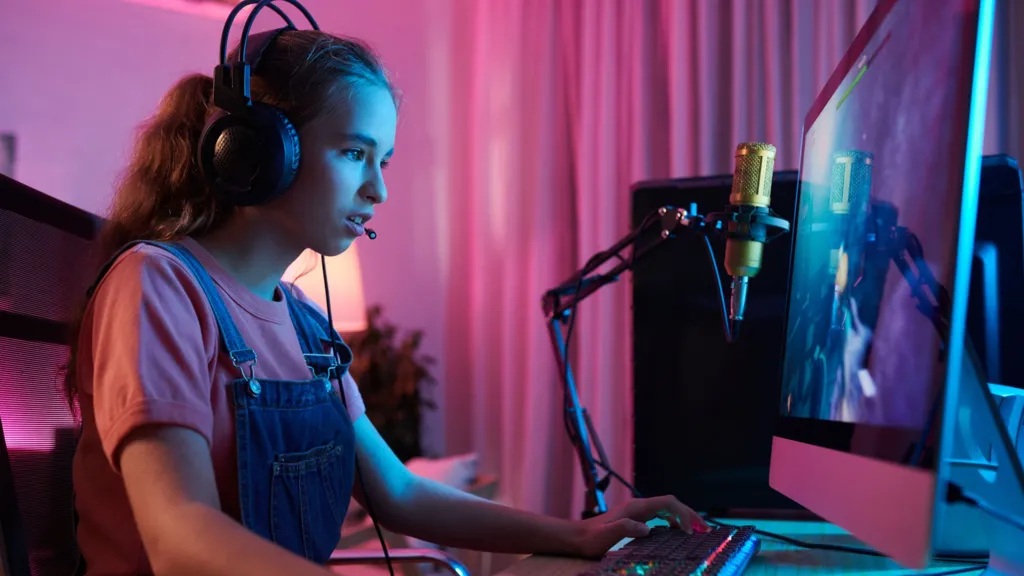
Dr. Daniela Vecchio, a psychiatrist at Australia’s only publicly-run gaming disorder clinic in Perth, calls the exclusion of platforms like Discord and Roblox from the new under-16 social media ban “odd.” She warns that gaming addiction, now a WHO-recognised disorder, is intricately linked to platforms like YouTube and social media, which are often used for livestreaming and connection.
Billionaire investor Frank McCourt (Project Liberty) says his consortium has raised the capital to buy TikTok’s US operations but remains in limbo as the Trump administration prepares to extend the sale deadline for a fifth time. McCourt expressed concern over the platform’s “concentration of power and influence” and plans to remove all Chinese technology, including the core algorithm.

CZT, a notoriously difficult-to-manufacture semiconductor, is enabling major advances in medical imaging, airport security, and X-ray telescopes. Due to its precise, single-step detection of X-rays and gamma rays, the material is in high global demand, complicating projects from a £500m UK synchrotron upgrade to US space missions threatened by supply shortages and the US government shutdown.

Analysts are calling the AI boom the \”Fourth Industrial Revolution,\” a 10-year build-out, after Nvidia reported strong earnings. CEO Jensen Huang argues demand is structural, not a bubble, driven by existing non-AI software infrastructure

Australia\’s \”world-leading\” social media ban for under-16s comes into force on December 10, impacting Facebook, Instagram, TikTok, X, and YouTube. Prime Minister Anthony Albanese says the law backs parents and aims to protect teenagers\’ mental health from online pressures, even as tech giants struggle with effective age verification.

Major sites like X and ChatGPT went down due to a Cloudflare internal crash. The security giant apologized for the \”unacceptable\” outage, and its share price dropped 3% as markets reacted
The ability to hijack AI agents with plain language means cybersecurity is no longer just for technical experts. Developers must prioritize user approval and least-privilege principles to mitigate the risk