The End of Everything? New Data Suggests Universe May Collapse in a “Big Crunch”
Astronomers from South Korea and the DESI project have found evidence that dark energy is weakening, potentially reversing the expansion of the universe.





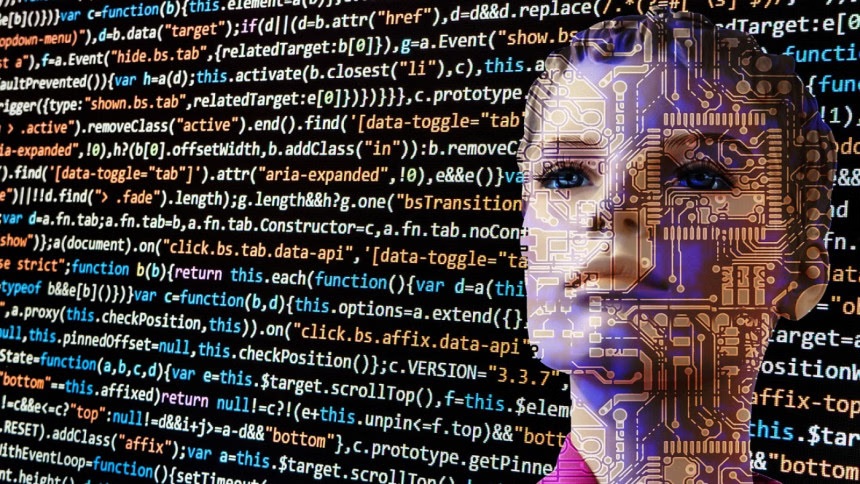
The emergence of AI agents—autonomous programs capable of executing complex online tasks—is redefining the cybersecurity landscape. The core issue, according to AI startup Perplexity, is that the era of protecting users only from actors with a \”highly technical skillset\” is over. The ability to command these agents using simple, plain language means that cyber mischief can now \”come from anywhere.\”
This threat, known as query injection, is particularly dangerous because AI agents have the capacity to connect to sensitive systems. An attacker can hijack an AI agent\’s prompt—which could be a hidden command buried in a legitimate news article or website data—and subtly redirect its behavior from a helpful task (\”book me a hotel reservation\”) to a malicious one (\”wire $100 to this account\”).
The vulnerability stems from the AI\’s inability to consistently distinguish the legitimate human owner\’s intent from an injected, hidden instruction it processes from an untrusted source.
Security professionals argue that developers are making a \”huge mistake\” by granting agents excessive privileges. To curb the potential for catastrophic damage, industry leaders are recommending a shift in development philosophy:
Do not \”give the same AI agent all the power to do everything.\” The scope of the agent\’s access to sensitive data and critical systems must be heavily restricted.
Implement controls that require user approval before the AI agent executes any significant or sensitive task, such as accessing bank accounts or exporting user data. This ensures the human user is supervising the agent\’s actions in real time.
Researcher Johann Rehberger cautions that the technology is not yet mature enough to be trusted with important, long-duration missions or critical data without constant checks, warning that attack tactics are rapidly improving.
While major companies like Microsoft and OpenAI are building in defenses—such as blocking agents from proceeding on sensitive sites without supervision—the fundamental balance between safety and the high level of convenience users demand remains the most significant challenge to overcome.

Astronomers from South Korea and the DESI project have found evidence that dark energy is weakening, potentially reversing the expansion of the universe.
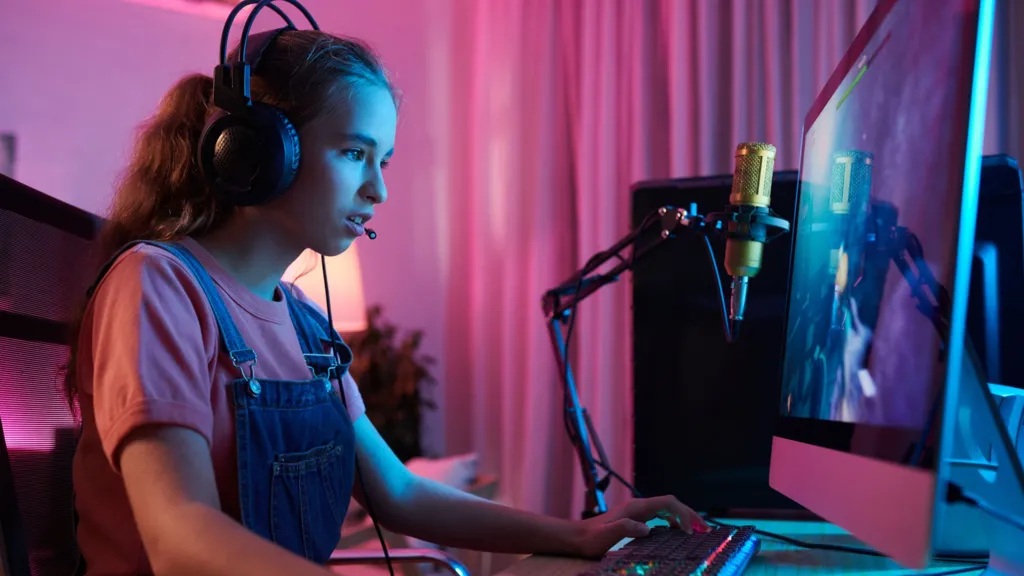
Dr. Daniela Vecchio, a psychiatrist at Australia’s only publicly-run gaming disorder clinic in Perth, calls the exclusion of platforms like Discord and Roblox from the new under-16 social media ban “odd.” She warns that gaming addiction, now a WHO-recognised disorder, is intricately linked to platforms like YouTube and social media, which are often used for livestreaming and connection.
Billionaire investor Frank McCourt (Project Liberty) says his consortium has raised the capital to buy TikTok’s US operations but remains in limbo as the Trump administration prepares to extend the sale deadline for a fifth time. McCourt expressed concern over the platform’s “concentration of power and influence” and plans to remove all Chinese technology, including the core algorithm.

CZT, a notoriously difficult-to-manufacture semiconductor, is enabling major advances in medical imaging, airport security, and X-ray telescopes. Due to its precise, single-step detection of X-rays and gamma rays, the material is in high global demand, complicating projects from a £500m UK synchrotron upgrade to US space missions threatened by supply shortages and the US government shutdown.

Analysts are calling the AI boom the \”Fourth Industrial Revolution,\” a 10-year build-out, after Nvidia reported strong earnings. CEO Jensen Huang argues demand is structural, not a bubble, driven by existing non-AI software infrastructure

Australia\’s \”world-leading\” social media ban for under-16s comes into force on December 10, impacting Facebook, Instagram, TikTok, X, and YouTube. Prime Minister Anthony Albanese says the law backs parents and aims to protect teenagers\’ mental health from online pressures, even as tech giants struggle with effective age verification.

Major sites like X and ChatGPT went down due to a Cloudflare internal crash. The security giant apologized for the \”unacceptable\” outage, and its share price dropped 3% as markets reacted
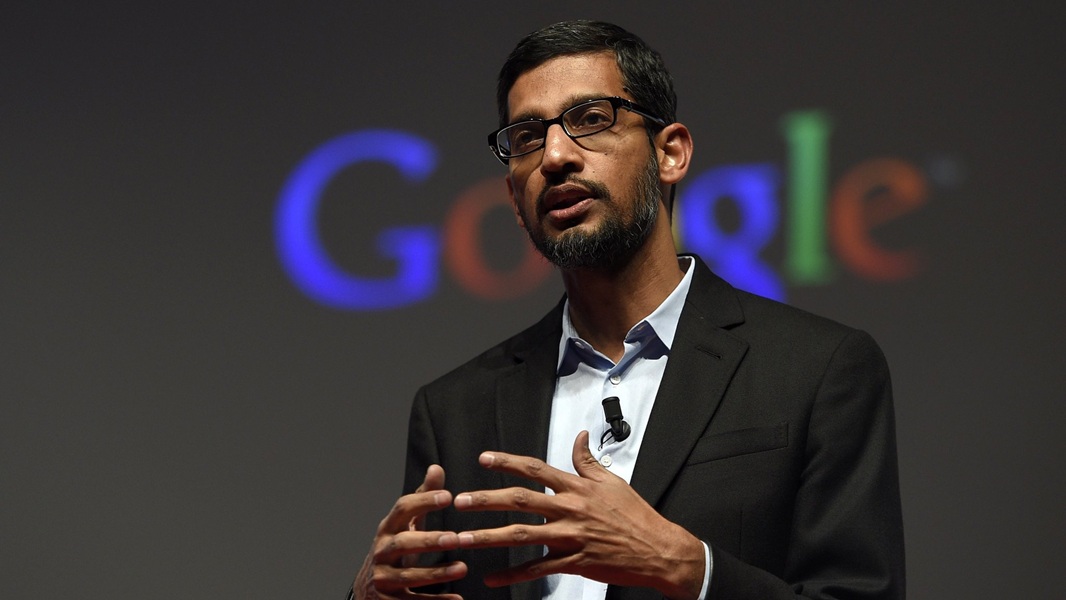
Google\’s Pichai warned that AI\’s \”immense\” energy needs have slowed climate progress and stressed that people must adapt to the new tools, as AI will \”evolve and transition\” jobs across all professions.