Financial Implications of Bangladesh’s Hypertension Epidemic
Experts call for increased budget allocation in FY2026-27 to combat the rising tide of hypertension, which now ranks as the top disease in Bangladesh.






For years, Dr. Gideon Lack, like most pediatric allergists, followed and dispensed the same cautionary advice: to prevent dangerous peanut allergies, avoid giving peanuts to babies until age three. It was a consensus that, as he now acknowledges, was \”completely backward.\”
The unraveling of this medical dogma began in an unlikely place—a lecture hall in Tel Aviv.
Lack, a British allergist who frequently saw peanut allergies in his London practice, was giving a talk to Israeli colleagues. When he asked how many had peanut-allergic patients, only a small fraction raised their hands. This was a critical divergence, especially since the London and Israeli Jewish communities shared a similar ancestral background.
The answer lay in a simple, cultural truism: the peanut puff snack, Bamba. Israeli babies are introduced to the peanut-rich snack as early as 4 to 6 months of age.
\”They all told me one very clear thing: ‘We give peanut snacks to our babies from between 4 and 6 months of age,’\” Lack recalled. He came to suspect that this simple difference in feeding habits was an accidental form of protection.
A subsequent observational study confirmed the suspicion: Jewish children in the UK had a tenfold higher rate of peanut allergy than their counterparts in Israel.
The next step was a rigorous scientific test. Despite initial criticism that the idea of feeding peanuts to babies was \”preposterous\” and unethical, Lack secured funding from the US National Institutes of Health for the LEAP trial.
The five-year study proved the hypothesis, showing that infants who ate peanuts early had an allergy rate of 1.9% compared to 13.7% for those who avoided them.
When the results came in, the team celebrated. \”We toasted the good news to whiskey and roasted peanuts,\” Lack said.
The successful reversal of the guidelines has since seen peanut allergy rates in young US children drop by 33%.
Now, Dr. Lack is tackling the next frontier with the SEAL study, focusing on eczema. He advocates for the \”dual-exposure hypothesis,\” likening the immune system\’s reaction to a home invasion:
\”If I were to knock on your front door and ask for directions, you’d probably greet me in a civil way. But if I were to break into one of the windows, you might greet me in a different way.\”
In this analogy, ingesting food is the polite \”front door,\” promoting tolerance. Exposure through inflamed, broken skin (eczema) is the \”broken window,\” causing the immune system to react violently and trigger an allergy. The SEAL study aims to fix that \”broken window\” early, using moisturizers and topical steroids in the first 12 weeks of life, in the hope of preventing allergies before they start.

Experts call for increased budget allocation in FY2026-27 to combat the rising tide of hypertension, which now ranks as the top disease in Bangladesh.

Ever wondered why you feel sleepy after a big meal? Scientists explain the “satiety cascade,” the insulin response, and whether one-off overeating is actually harmful.

The CDC has officially abandoned its 1991 recommendation for universal Hepatitis B vaccination at birth. Under new guidelines influenced by RFK Jr., parents of infants born to HBsAg-negative mothers will now use shared decision-making to delay or skip the birth dose, a move experts fear will increase chronic liver disease and childhood infections.

CZT, a notoriously difficult-to-manufacture semiconductor, is enabling major advances in medical imaging, airport security, and X-ray telescopes. Due to its precise, single-step detection of X-rays and gamma rays, the material is in high global demand, complicating projects from a £500m UK synchrotron upgrade to US space missions threatened by supply shortages and the US government shutdown.
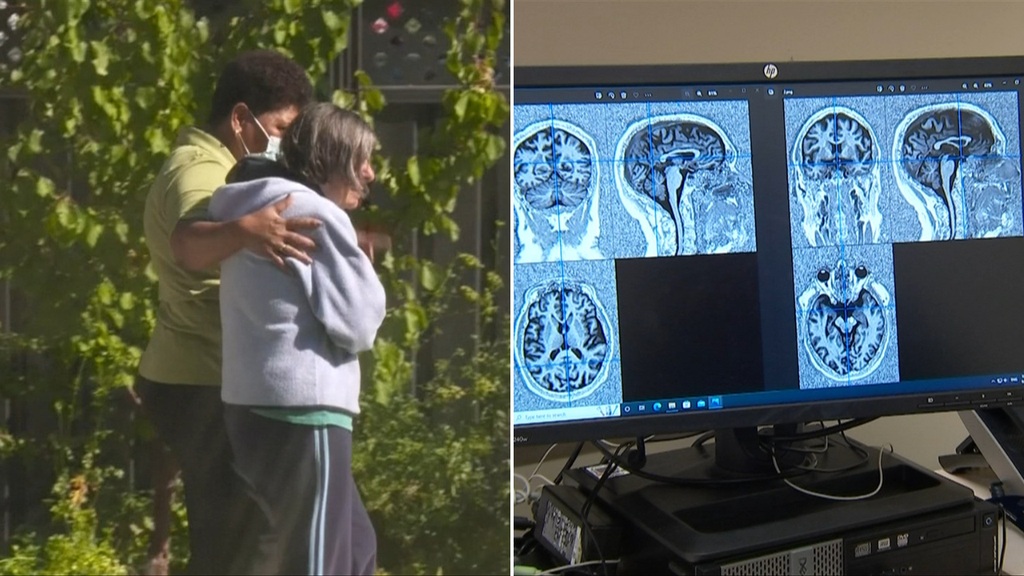
Dementia is confirmed as Australia\’s leading cause of death for 2024, with 62.4% of victims being female. The shift highlights the disproportionate impact on women due to longer life expectancies, creating immense pressure on the healthcare system and demanding urgent national focus on preventative brain health.

Walking up to 7,500 steps daily may delay cognitive decline by 7 years for those with early Alzheimer\’s signs. Experts urge walking be part of a personalized health plan.

Autistic researcher and CDC consultant argues the 1-in-31 diagnosis rate is an opportunity. Calls for policy changes in education, employment, and cities to support autistic adults