Financial Implications of Bangladesh’s Hypertension Epidemic
Experts call for increased budget allocation in FY2026-27 to combat the rising tide of hypertension, which now ranks as the top disease in Bangladesh.





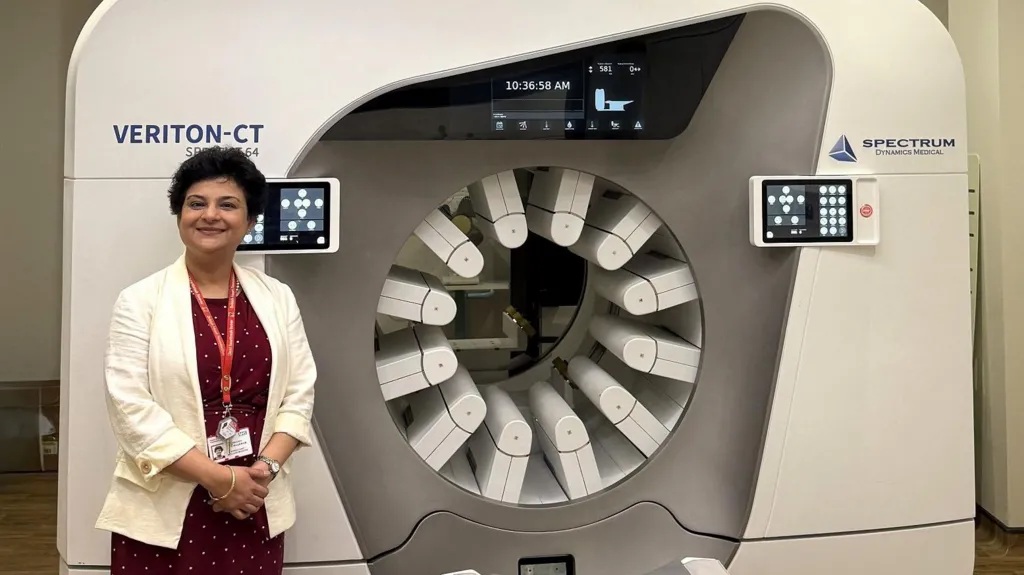
Sedgefield, UK — A notoriously difficult-to-manufacture semiconductor, Cadmium Zinc Telluride (CZT), is at the heart of breakthroughs across astrophysics, medical imaging, and global security, driving a global scramble for supply that is challenging major research institutions.
CZT is prized for its ability to detect photon particles in X-rays and gamma rays with incredible precision in a single conversion step, creating detailed, spectroscopic “colour” images.

Special furnaces are needed to make CZT
The material’s unique properties are essential for multiple high-stakes applications:
Medical Imaging: At Royal Brompton Hospital in London, CZT-based scanners have cut patient examination times from 45 to 15 minutes while improving the quality of 3D lung images.
Security: CZT detectors are currently used for explosives detection at UK airports and scanning checked baggage in the US, with expectations to move into the hand luggage segment soon.
Astrophysics: Professor Henric Krawczynski at Washington University in St Louis seeks thin CZT detectors for X-ray telescopes that observe phenomena like neutron stars and plasma around black holes.

Very few organisations can supply cadmium zinc telluride
Despite its utility, CZT remains notoriously hard to produce. Arnab Basu, founding chief executive of Kromek, one of the world’s few industrial-scale manufacturers, describes the painstaking, weeks-long process where powder is heated and solidified in furnaces, rearranging atoms into a single-crystal structure.
The demand for the highly specialized material is currently outpacing supply. Professor Krawczynski reported difficulty in sourcing very thin, 0.8mm pieces for his space telescopes, an issue compounded by the recent US government shutdown, which has halted his upcoming mission dates.
In the UK, the material is central to the half-a-billion-pound upgrade of the Diamond Light Source research facility in Oxfordshire. This synchrotron produces X-rays for material analysis, but the upgrade will make the X-rays significantly brighter—too powerful for existing sensors.
Matt Veale, group leader for detector development at the Science and Technology Facilities Council, confirmed that without CZT-based detectors, the entire upgrade is pointless: “There’s no point in spending all this money in upgrading these facilities if you can’t detect the light they produce.” The installation of CZT is critical to the project’s completion, currently slated for 2030.

Experts call for increased budget allocation in FY2026-27 to combat the rising tide of hypertension, which now ranks as the top disease in Bangladesh.

Astronomers from South Korea and the DESI project have found evidence that dark energy is weakening, potentially reversing the expansion of the universe.

Ever wondered why you feel sleepy after a big meal? Scientists explain the “satiety cascade,” the insulin response, and whether one-off overeating is actually harmful.
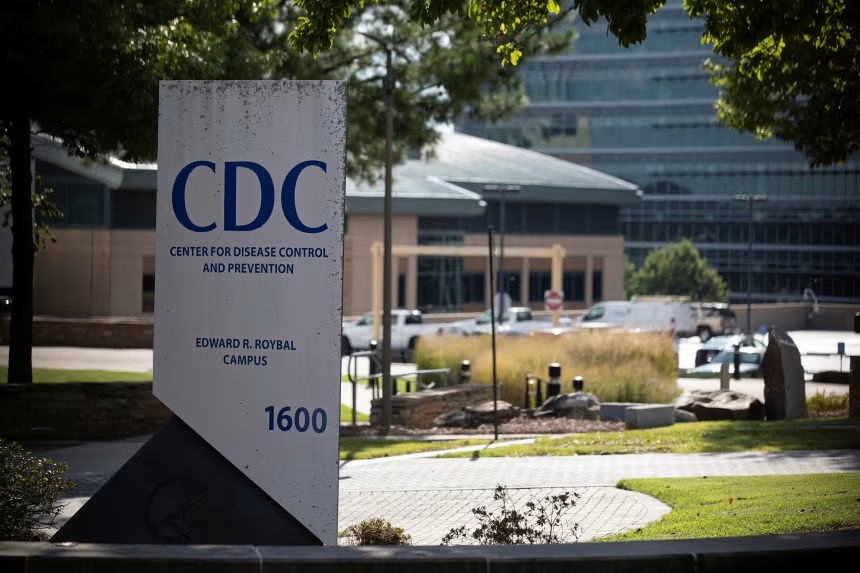
The CDC has officially abandoned its 1991 recommendation for universal Hepatitis B vaccination at birth. Under new guidelines influenced by RFK Jr., parents of infants born to HBsAg-negative mothers will now use shared decision-making to delay or skip the birth dose, a move experts fear will increase chronic liver disease and childhood infections.

Dr. Daniela Vecchio, a psychiatrist at Australia’s only publicly-run gaming disorder clinic in Perth, calls the exclusion of platforms like Discord and Roblox from the new under-16 social media ban “odd.” She warns that gaming addiction, now a WHO-recognised disorder, is intricately linked to platforms like YouTube and social media, which are often used for livestreaming and connection.

Billionaire investor Frank McCourt (Project Liberty) says his consortium has raised the capital to buy TikTok’s US operations but remains in limbo as the Trump administration prepares to extend the sale deadline for a fifth time. McCourt expressed concern over the platform’s “concentration of power and influence” and plans to remove all Chinese technology, including the core algorithm.

Analysts are calling the AI boom the \”Fourth Industrial Revolution,\” a 10-year build-out, after Nvidia reported strong earnings. CEO Jensen Huang argues demand is structural, not a bubble, driven by existing non-AI software infrastructure

Australia\’s \”world-leading\” social media ban for under-16s comes into force on December 10, impacting Facebook, Instagram, TikTok, X, and YouTube. Prime Minister Anthony Albanese says the law backs parents and aims to protect teenagers\’ mental health from online pressures, even as tech giants struggle with effective age verification.